
“How many units will I need?” is one of the first questions people ask when considering Botox, especially if it’s your first time and you’re trying to understand cost, results, and safety. If you’re wondering how many units of Botox do I need, the answer depends on several personal factors.
In a medical setting, we look at Botox dosing the same way we look at many treatments in primary care: there’s a typical starting range, but the right plan depends on you—your anatomy, muscle strength, goals, and medical history. Below, we’ll walk through what “units” actually mean, common dosing ranges by area, medical uses that require different dosing, and how a clinician decides on a safe, natural-looking approach.
What “Units” Mean And Why Botox Dosing Isn’t One-Size-Fits-All
When patients ask, “how many units of Botox do I need,” they’re usually trying to picture two things: how strong the treatment will be and what it might cost. Units help us standardize dosing, but they don’t tell the whole story.
How Botox Units Are Measured
A unit is a standardized measurement of Botox’s activity (similar in concept to “milligrams” for some medicines, but not interchangeable). Units allow trained clinicians to deliver consistent amounts to specific muscles.
A key point: Botox units aren’t the same across every brand of botulinum toxin product. Botox (onabotulinumtoxinA) has its own unit system, and other products (like Xeomin, which is what we use) are dosed differently. So if you’re comparing quotes online, make sure you’re comparing the same medication.
What Changes The Number Of Units You’ll Need
Even for the same treatment area, dosing can vary. Common reasons include:
- Muscle strength and activity: Stronger facial muscles often need more units for the same softening effect.
- Your anatomy: Forehead shape, brow position, and natural asymmetry matter.
- Depth of lines: Dynamic lines (from movement) respond differently than lines etched in at rest.
- Your goals: Some patients want subtle softening; others want more smoothing.
- Sex and body build: On average, men often need more units due to stronger muscles.
- Prior Botox experience: We can learn from how long it lasted and how your muscles responded.
Online unit numbers can be helpful as a starting point, but your safest estimate comes from an in-person assessment.
Typical Botox Units By Treatment Area

Below are typical dosing ranges for cosmetic concerns. Think of these as ballpark ranges—your plan may be lower or higher depending on your exam and goals.
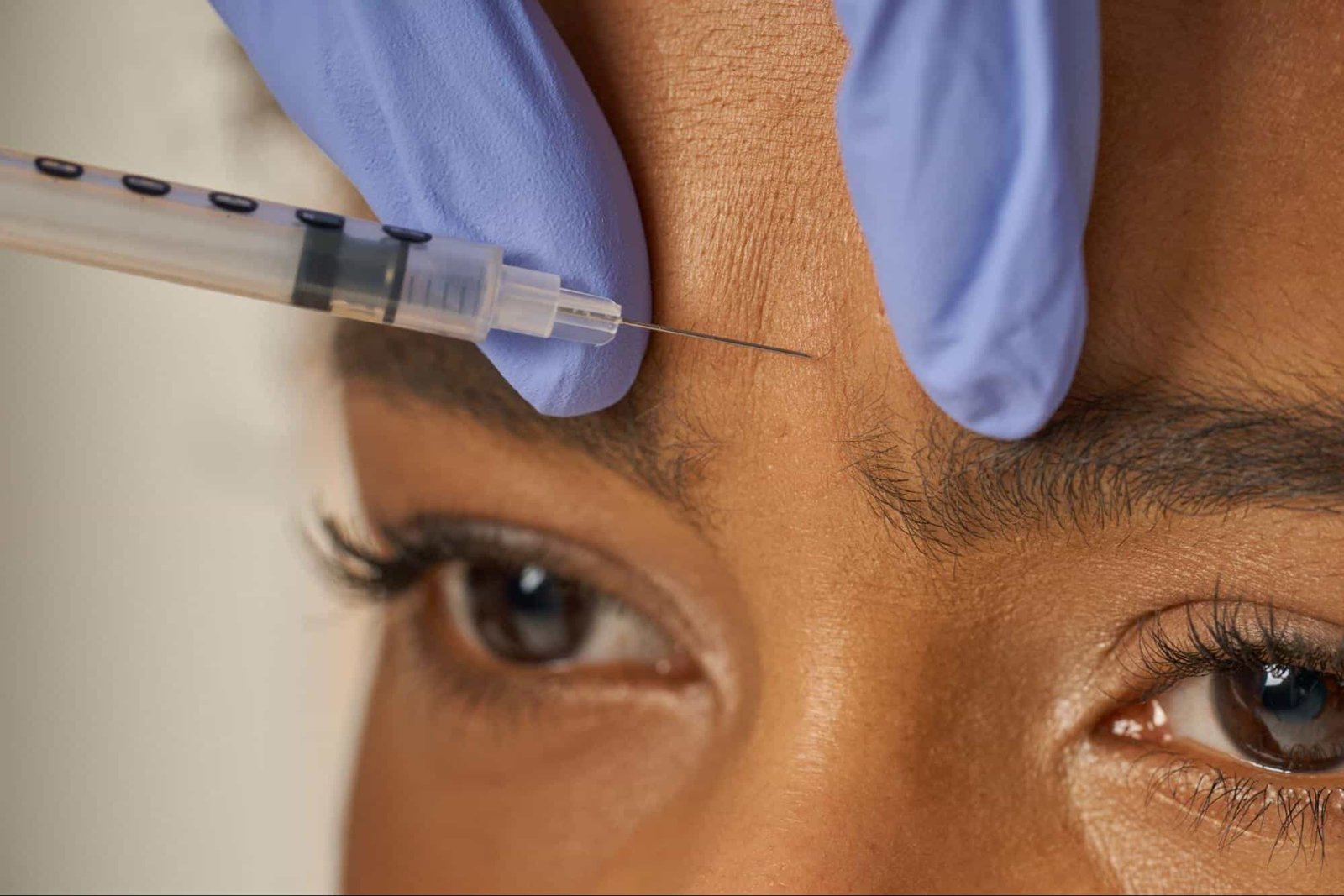
Forehead Lines (Frontalis)
The forehead muscle lifts the brows. Because it’s tied to brow position, we’re careful—too much can feel heavy or lower the brow.
- Typical range: ~8–20 units
- Why it varies: Forehead height, baseline brow position, and how strongly you raise your brows.
Frown Lines Between The Brows (Glabella)
These are the “11” lines that show up when you squint or concentrate.
- Typical range: ~15–25 units
- This is one of the most consistently treated areas because the muscles tend to be strong and results look natural when done thoughtfully.
Crow’s Feet (Lateral Canthal Lines)
These form at the outer corners of the eyes with smiling.
- Typical range: ~6–12 units per side (about 12–24 total)
- Goal: Soften crinkling while keeping a normal, warm smile.
Bunny Lines, Chin Dimpling, And Lip Flip
These smaller areas require precision—a little goes a long way.
- Bunny lines (nose): ~4–8 units total
- Chin dimpling (mentalis): ~4–10 units total
- Lip flip (upper lip): ~4–8 units total
Jawline Slimming And Teeth Grinding (Masseter)
Masseter treatment can address facial slimming or help with jaw clenching/teeth grinding.
- Typical range: ~15–30 units per side (about 30–60 total)
- Changes can be more gradual here than in the upper face.
Neck Bands (Platysmal Bands)
- Typical range: ~20–50 units total
- This area deserves a careful exam, since different neck concerns respond differently.
Medical Uses That Can Require Different Dosing

Botox isn’t only used for cosmetic concerns. In medicine, botulinum toxin has well-established uses where dosing is often higher and guided by specific protocols.
Chronic Migraine
Botox for chronic migraine follows a standardized injection pattern across the head and neck.
- Typical protocol dose: often around 155 units distributed across multiple sites
Excessive Underarm Sweating (Hyperhidrosis)
For underarm hyperhidrosis, Botox is injected in a grid-like pattern.
- Typical dose: often about 50 units per underarm (about 100 units total)
Muscle Spasm And Other Therapeutic Indications
Dosing varies widely based on muscle size, number of muscles treated, and the condition being addressed—typically under specialist care.
How Clinicians Decide Your Starting Dose
In clinic, we’re not guessing. We examine how your muscles behave and how to meet your goals while keeping you looking like yourself.
Assessment At Rest And With Facial Movement
A good assessment includes:
- At rest: Are lines present when your face is relaxed?
- With movement: What happens when you raise your brows, frown, smile, or squint?
We also check for natural asymmetry. The goal isn’t a perfectly “even” face—it’s a balanced, natural result.
Balancing Results With Natural Expression
Most patients want to look rested, not different. Dosing is a balancing act:
- Too little may soften lines only slightly or wear off quickly.
- Too much can feel stiff or change expression.
When A Two-Step Plan Makes Sense
For first-time patients, a conservative start is often safest:
- Start with a reasonable baseline dose based on your exam.
- Recheck in about 2 weeks when Botox is near peak effect.
- Adjust if needed with a small touch-up.
What To Expect After Treatment

When You’ll See Results
- Early changes: about 3–5 days
- Peak effect: around 10–14 days
If you’re unsure the next morning, it’s usually just too soon to judge.
How Long Results Typically Last
For many cosmetic areas, results often last about 3–4 months. Duration can shorten with very strong muscles, higher activity levels, or longer intervals between treatments.
Safety Considerations
Botox has a strong safety record when used appropriately by trained professionals.
Who Should Avoid Or Delay Botox
We may recommend avoiding Botox if you:
- Are pregnant or breastfeeding
- Have certain neuromuscular conditions (e.g., myasthenia gravis)
- Have an active skin infection at the injection site
- Have a history of significant reactions to botulinum toxin
Common Side Effects Vs. When To Call
Common, mild side effects include temporary redness, swelling, bruising, or mild headache.
Call the clinic if you notice drooping eyelid, significant asymmetry, trouble swallowing or breathing, or worsening weakness beyond the treated area.
How To Talk With A Clinician About Units And Cost
Questions To Bring
- “What areas are you recommending, and why?”
- “About how many units of Botox do you expect I’ll need?”
- “Can we start conservatively and adjust at follow-up?”
- “What would a natural result look like on my face?”
- “How long should I wait before an event or photos?”
Why “Cheapest Units” Isn’t Always Best
Many clinics price Botox per unit, but shopping on price alone can be misleading:
- Dilution and technique matter.
- Experience and assessment matter.
- Follow-up and accountability matter.
It’s okay to ask what product is being used, who is administering it, and what follow-up looks like.
Conclusion
If you’re trying to figure out how many units of Botox you need, the honest answer is: there’s a typical range for each area, but your best dose depends on your muscle strength, facial anatomy, and what “natural” means to you.
In a clinical setting, we focus on conservative, individualized plans—especially for first-time patients—because the goal is not to change your face. It’s to soften certain muscle patterns safely and predictably.
If you’re considering Botox and want a clear estimate of units and a plan that fits your comfort level, you’re welcome to schedule a visit. We’ll talk through your goals, examine the areas you’re concerned about, and decide together what approach makes sense.
How Many Units of Botox Does a First-Timer Usually Need?
First-time patients typically need between 20 to 60 units, depending on which areas they want treated. A common starting point is 20 units for forehead lines and 20 units for frown lines. Your clinician may start conservatively and adjust at a follow-up appointment.
Is 50 Units of Botox a Lot?
No, 50 units is a moderate and common amount for treating multiple areas. For example, someone addressing both forehead lines and crow’s feet would likely fall within this range. The total depends on your facial anatomy and treatment goals.
How Many Units of Botox Do I Need for My Forehead?
Most people need between 10 to 30 units for forehead lines (frontalis muscle). The exact number varies based on forehead size, muscle strength, and how deep your lines are. Women typically need fewer units than men.
Why Do Some People Need More Botox Units Than Others?
Several factors influence dosing, including muscle mass, metabolism, gender, and treatment history. People with stronger facial muscles or those who’ve had Botox before may require more units to achieve the same results.
Can I Request a Specific Number of Botox Units?
Yes, you can discuss your preferences with your clinician, but the final recommendation should be based on their professional assessment. Requesting too few units may lead to underwhelming results, while too many could create an unnatural look.
How Often Will I Need to Repeat My Botox Units?
Most patients return for treatment every 3 to 4 months. Over time, some people find they need fewer units as their muscles weaken from consistent treatments. Your clinician can help establish an ideal maintenance schedule.
Does Getting More Botox Units Mean Longer-Lasting Results?
Not necessarily. Using more units than needed won’t extend your results significantly and may lead to an overdone appearance. Proper dosing based on your anatomy is more effective than simply increasing units.
How Many Units of Botox Are Safe in One Session?
For cosmetic purposes, most treatments use 20 to 64 units per session. Medical uses like chronic migraines may require up to 155 units. A trained clinician will ensure your dosing stays within safe, FDA-approved guidelines.